
6 things small businesses should know about express delivery in Melbourne
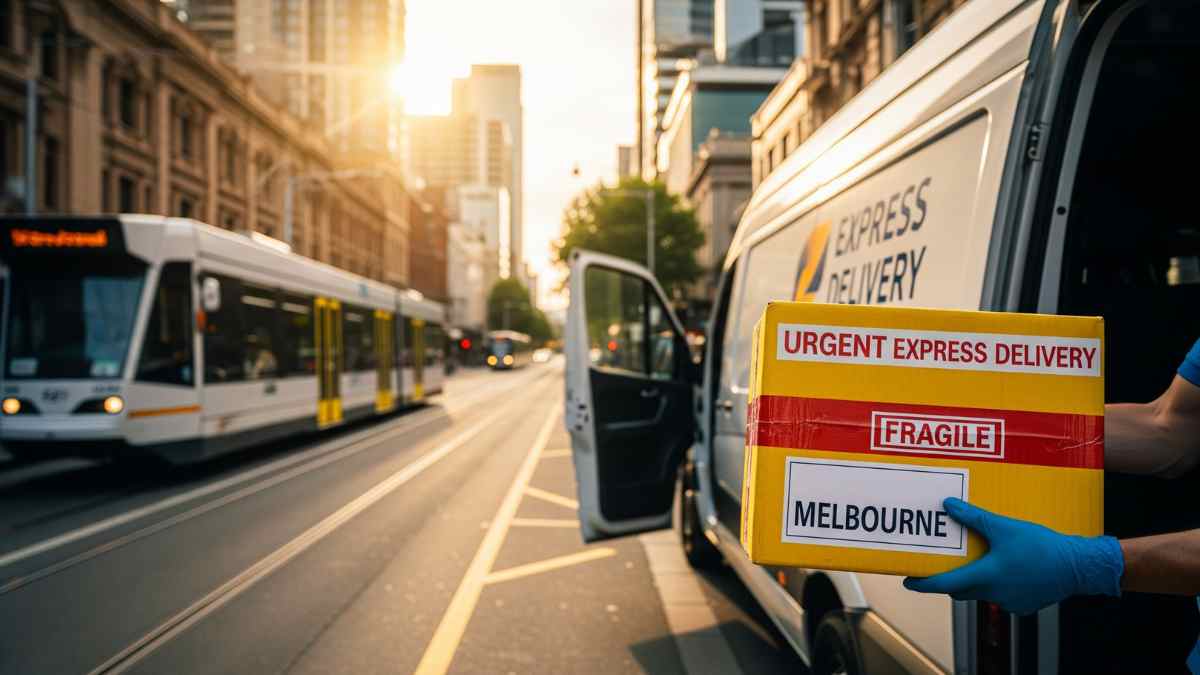
Express delivery in Melbourne moves fast; it’s designed to. Once you understand how the fast courier world works, you’ll use it as an important tool.
Express delivery in Melbourne sounds simple, but until you are the one explaining why an order will only be shipped the next day, you don’t understand how complicated it is.
There are things like service radiuses, cut-offs, proof, and pricing, and it can all work in your favour if you know how.
Here are six practical things to know before you promise a 3-hour drop.
1) ‘Express’ always comes with a radius
Distance is how speed is measured. You cannot promise customers that you’ll deliver all your orders in 3 hours when the destination is 120km from Melbourne.
Most same-day express couriers clearly state that they can deliver your orders in, let’s say, 2 hours, but only within a 20km radius.
So radius is vital to speed things up.
2) Booking windows and cut-offs shape your real speed
Time windows and cut-off times are important. When an order is placed outside business hours, there is nothing a customer can do.
Even if you are the fastest courier. Zoom2u has cut-off times in place (8am-6pm) even though they take bookings in Melbourne 7 days a week, including weekends and public holidays.
Make sure that you explicitly inform your customers of these.
Tip: Put a clear “order by” cutoff on your site (even if it’s just in your checkout notes). “Order by 1pm for same-day dispatch” saves arguments later.
3) ‘Fast’ pricing isn’t just distance; it’s urgency and handling
Express delivery pricing usually spikes when you add extra services or make the parcel heavier. If you want to keep delivery costs as low as possible, look out for these things that can easily drive up the price.
- Adding priority or direct-to-door jobs.
- Making the parcel with heavy or bulky items.
- Insist on after-hours or weekend work.
- Let the courier wait longer at pickup or drop-off.
- Request special handling for parcels.
Make sure you build a buffer with the price when delivering fragile items like medical equipment or sensitive items. You don’t want to quote them on a lower price and disappoint them when it costs more at the end of the day.
The customer only sees the delivery fee; you see the full chaos invoice.
4) Tracking is your support team in disguise
When a delivery is urgent, silence feels like the courier is not doing its job. Visibility is so important during this process. Customers are already feeling anxious, and not knowing whether the parcel is stationary or moving makes it even more frustrating.
Many courier platforms emphasise visibility and transparency as part of the service experience. Software like Locate2u can easily help send a live location to the customer with an accurate ETA to avoid those questions and calls asking where the parcel is.
You can even automate the messages so that, the moment the driver leaves the warehouse, a message is sent to the customer to inform them that the parcel is on the move.
5) Proof of delivery protects you when things get spicy
Express deliveries often trigger disputes because expectations are higher. Solid proof of delivery should include timestamps, GPS locations, photos, and signatures, as needed.
Locate2u’s POD tools, for instance, include photos and e-signatures so you can resolve “it didn’t arrive” claims quickly.
Tip: Decide your POD rule by product type:
- High value: signature + photo
- Leave-at-door: wide-angle photo + note
- Business drop: recipient name + time stamp
6) You don’t need one courier. You need a plan
Melbourne deliveries vary wildly by time of day, suburb, traffic, and job type. Many businesses use a mix: one on-demand courier for urgent metro, and another for wider Victoria lanes.
Some platforms position themselves as multi-carrier management tools so you can compare and choose per job.
Even global players like FedEx may be a better fit for certain parcel profiles (especially non-metro or international).