
How Express Couriers Are Going Green in 2026: Guide
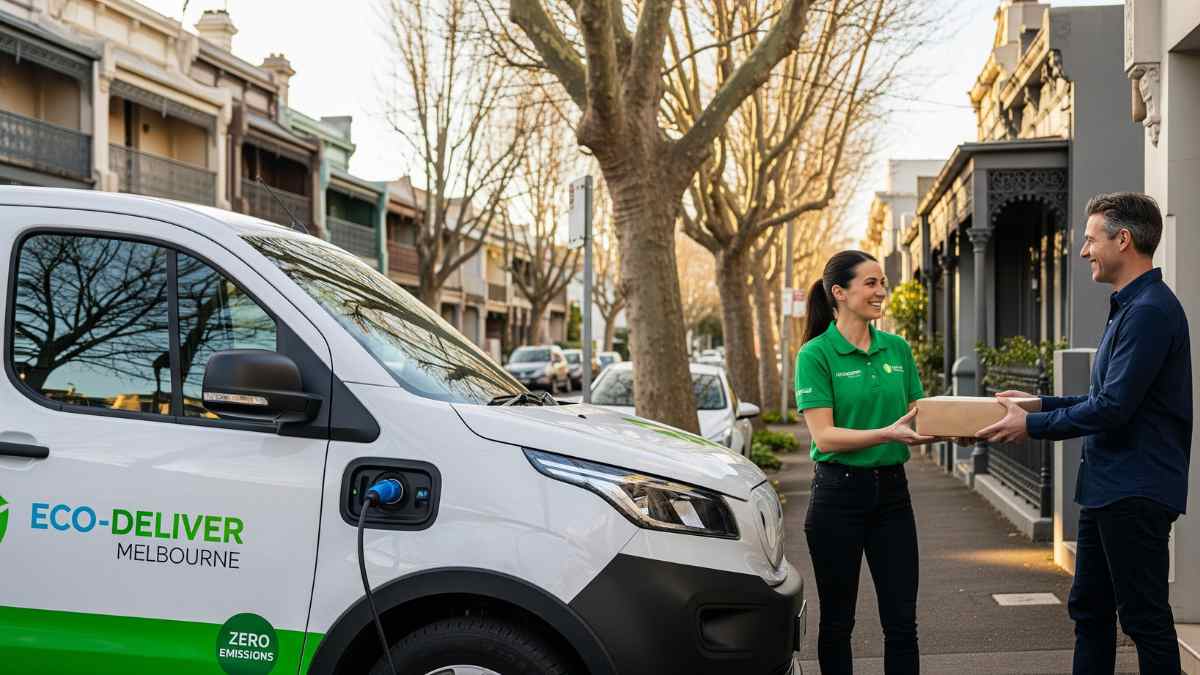
Have you seen more electric vans zigzagging through traffic in your neighborhood? This is because the express courier industry is undergoing a significant shift in environmental consciousness.
It’s taken decades to get to this point. But 2026 seems to mark the turning point.
Kia will be launching its all-electric van, the PV5, in Australia in 2026. According to a 2025 study by Mordor Intelligence, Australia’s electric commercial vehicle market size is estimated to reach USD 7.92 billion by 2030.
If you are a business owner, you need to understand how couriers are going green and how you can help to make smarter delivery decisions.
Why Sustainability Matters in Express Courier Services
Historically, the logistics industry has been the largest contributor to carbon emissions. Think about the fuel used by trucks daily, inefficient routing, and the sheer volume of global trading.
But these days, customers and businesses are holding the industry accountable. Customers prefer brands that demonstrate genuine environmental responsibility.
When customers know you are responsible and committed to cutting down unnecessary boxes, plastics, gases, and other things harmful to the environment, you are more likely to get a customer for life.
So, if you are a business owner, it’s important to partner with a sustainable courier service that offers multiple benefits.
Why, you ask? Because…
- They enhance brand reputation.
- Comply with government regulations.
- You are saving costs.
- And it’s future-proofing, more companies are moving to EVs.
Sustainable Aviation Fuel: Tackling the Biggest Emissions Challenge
Aviation accounts for the largest share of fuel consumption in courier operations globally, making it the biggest opportunity to reduce emissions.
That’s why sustainable aviation fuel (SAF) has become a cornerstone of courier sustainability efforts in 2026.
What Is Sustainable Aviation Fuel?
SAF is produced from waste feedstocks including used cooking oil, fats, greases, and vegetable oils—materials that would otherwise end up in landfill.
When used in aircraft, SAF can significantly reduce lifecycle greenhouse gas emissions compared to conventional jet fuel.
Industry Leaders Making Big Moves
Major courier companies are securing landmark SAF partnerships:
- DHL Express established one of the largest SAF deals in the air cargo industry, with total consignments estimated to reduce lifecycle greenhouse gas emissions by approximately 737,000 tonnes over three years.
- FedEx launched its first U.S. SAF operations at Los Angeles International Airport, securing over 3 million gallons with a minimum 30% neat SAF blend.
These initiatives demonstrate that even the most carbon-intensive aspects of courier operations can be transformed with the right investments and partnerships.
Electric Vehicle Fleets: The Future of Last-Mile Delivery
Electric vehicles have become the defining characteristic of green courier operations. From delivery vans to cargo bikes, couriers are rapidly electrifying their fleets to achieve zero tailpipe emissions during operation.
The Benefits of Electric Delivery Vehicles
Electric vehicles offer compelling advantages for courier operations:
- No exhaust fumes during delivery runs
- Lower overall carbon footprint
- EVs can enter restricted city centre areas where diesel vehicles are banned.
- Quieter operations.
- Electricity is typically cheaper per kilometre than diesel or petrol.
Real-World EV Adoption
DHL, one of the leaders in the logistics space, has deployed over 36000 electric vehicles globally. It was reducing greenhouse gas emissions by 1.3 tonnes by 2023.
In Singapore alone, DHL Express expanded its EV fleet to 117 vehicles.
But it doesn’t stop there. Australia Post has deployed 500 electric three-wheelers in 2025 to replace petrol ones.
These nimble vehicles can navigate congested city streets efficiently while producing zero emissions. It’s perfect for time-sensitive same-day deliveries in metropolitan areas.
Smart Routing and Operational Efficiency
Sometimes the greenest delivery is simply the most efficient one. Operational efficiency directly reduces emissions, and courier companies are deploying sophisticated technologies to optimize every journey.
AI-Driven Route Optimization
Modern courier platforms use artificial intelligence to plan the most efficient delivery routes. This technology considers multiple factors:
- Traffic patterns and real-time congestion data
- Delivery time windows and priorities
- Vehicle capacity and load optimization
- Weather conditions affecting travel times
The result? Fewer kilometres driven, less fuel consumed, and lower carbon emissions. All of this is happening while maintaining the fast delivery times customers expect.
Eco-Driving Training Programs
Technology is only part of the solution, and driver behaviour training programs are teaching couriers eco-driving habits. This includes:
- No more aggressive breaking.
- Limited idling
- Maintaining optimal speed
- Planning ahead
Warehouse Consolidation
Grouping deliveries together to require fewer trips substantially reduces carbon emissions compared to frequent short runs.
Smart consolidation means one well-planned delivery route can replace multiple individual journeys.
For businesses managing their own delivery operations, tools like Locate2u offer powerful route-optimization capabilities that can significantly reduce fuel consumption while improving delivery efficiency.
Sustainable Packaging and Green Facilities
Going green extends beyond vehicles to every aspect of courier operations. Think of the paper you use to wrap your products in, the box, and the stuffing; all of this ends up at the dump site.
Here are some things to think about:
Eco-Friendly Packaging Solutions
Green packaging practices are becoming standard across the industry:
- Many couriers now offer boxes made entirely from recyclable content.
- Search for packaging sourced from responsibly managed forests.
- Keep to the right size! You’ll also save on the courier fees.
- Replace your styrofoam peanuts with compostable alternatives.
Net-Zero Warehouses
Facilities themselves are being redesigned for sustainability. Modern net-zero warehouses incorporate features such as solar panels, LED lights that turn on when motion is detected, and water-recycling systems.
How Customers Can Participate in Green Shipping
Sustainability isn’t just the courier’s responsibility. Forward-thinking companies are empowering customers to reduce their shipping emissions through innovative programs and tools.
Carbon Offset Programs
Many courier services now offer carbon offset options that allow customers to compensate for their shipping emissions. These programs typically fund:
- Renewable energy projects
- Reforestation initiatives
- Sustainable aviation fuel procurement
- Clean technology development
Sustainability Insights Tools
Some couriers provide detailed emissions data for each shipment, enabling businesses to:
- Track their shipping carbon footprint over time.
- Compare emissions across different delivery options.
- Make data-driven decisions about sustainable shipping.
- Report accurately on the environmental impact to stakeholders.
Choosing Greener Delivery Options
As a consumer or business, you can actively support sustainable logistics by:
- Consolidating orders – Fewer shipments mean fewer delivery trips
- Selecting eco-friendly delivery windows – Flexible timing allows couriers to optimize routes.
- Choosing local couriers with EV fleets – Supporting companies investing in sustainable vehicles.
- Opting for sustainable packaging – Requesting recyclable materials when available
What This Means for Australian Businesses and Consumers
The global shift toward sustainable courier services is particularly relevant for Australian businesses. With growing consumer awareness and tightening regulations, choosing a green delivery partner has become a strategic decision.
In Australia, leading courier platforms are already embracing sustainability.
Zoom2u, for example, operates a technology-driven delivery network that optimizes routes for efficiency, reducing unnecessary kilometres and emissions. The platform’s real-time tracking and smart dispatching ensure deliveries are completed as efficiently as possible, good for customers and the environment alike.